
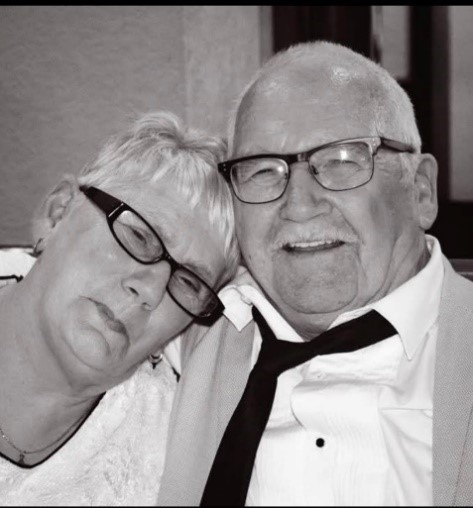
 Mr Stephen Charnley is an 82-year-old man who is deeply devoted to his family. He is married to his wife, Pauline, and together they have a large and close-knit family, including seven children and stepchildren, 16 grandchildren, 18 great-grandchildren, and one great-great-grandchild. Stephen is an Army veteran and spent his working life in Barrow-in-Furness, where he was employed at the Wire Works, Bowater Scott, and Bradys Transport. Prior to his declining health, Stephen also gave his time to volunteering with children.
Stephen’s health remained relatively stable until November 2024, when he was admitted to Furness General Hospital (FGH) with fluid retention, worsening shortness of breath, and chest pain. During this admission, he was diagnosed with heart failure. He remained an inpatient on Ward 9 for two weeks and was subsequently discharged on multiple medications. No formal support was arranged at discharge, and Stephen relied entirely on the care provided by his wife, Pauline, and his granddaughter, Nikki.
In January 2025, Stephen was readmitted with similar symptoms, although his heart failure had further deteriorated. He remained on Ward 9 for five days, during which time he was referred to the Heart Failure Community Team.
Stephen was again admitted as an emergency in February 2025, presenting with the same symptoms. He spent five days on Ward 7, where he was treated for gross fluid overload and received a cardiology review.
In May 2025, Stephen was admitted to Ward 9 for an eight-day stay due to ongoing symptoms. Upon discharge, his care was transferred back to his GP, who was to follow up his heart failure management and monitor his blood results.
In August 2025, the Lead Pharmacy Technician at UHMBT identified that Stephen’s insulin had been discontinued in December 2024. However, due to poor communication, Pauline who had been diligently managing Stephen’s medications was not informed of this change and continued administering insulin. This resulted in frequent hypoglycaemic episodes, causing significant distress to both Stephen and Pauline. These events could have been avoided with clearer communication and information sharing.
During collection of the patient story, the family raised a potential concern regarding confusion with prescription medication. This was promptly logged as a UHMBT incident to support appropriate review and organisational learning. The review concluded there was no error by UHMBT staff; however, it was identified that the patient may have retained a stockpile of medication at home, with no evidence of recent prescriptions requested or approved for the identified drug by the GP or hospital. NHS staff should continue to address risks like this one through clear and proactive communication with patients and families, including asking about all medicines held at home, clearly explaining current prescriptions and changes, encouraging regular medication reviews, advising on safe disposal of unused medicines, and ensuring concerns are documented and shared across care teams.
The Integrated Wellness Service (IWS) was launched in March 2025, and Stephen was identified on their dashboard due to having more than three inpatient admissions. The IWS has been visiting Stephen and Pauline regularly since July 2025, providing ongoing support. Stephen’s preferred place of care is his own home, and as a result of IWS involvement, referrals were made to both the Heart Failure Nurse and Community Respiratory teams, who have provided home visits.
From October to December 2025, Stephen received 12 weeks of palliative care support from the St Mary’s Hospice at Home Team in Ulverston. This included up to four daily visits to assist with personal care and pain management. Despite expectations, Stephen survived beyond the 12-week period and is now supported by Twilight Care Agency in Barrow-in-Furness, who visit three times daily. Following discussions with Stephen and Pauline regarding his preferred place of death, the Integrated Wellness Service made a referral to the District Nursing Team, who assessed Stephen and supplied “just in case” medications. This will help ensure that Stephen can experience a peaceful and controlled death when the time comes.
Stephen currently lives with 13 comorbidities, including heart failure, diabetes, chronic obstructive pulmonary disease (COPD), and chronic kidney and liver disease.
Stephen and Pauline have expressed immense gratitude to the Integrated Wellness Service team for their vital support during an extremely challenging period. Having previously had no formal assistance, they now feel fully supported by a coordinated, compassionate team that has cared not only for Stephen but also for Pauline in her role as his primary carer. The team has also signposted them to additional services, including Carer Support Furness and Age Concern, who have provided assistance with benefit applications such as the winter fuel allowance and the arrangement of power of attorney. Stephen and Pauline remain deeply thankful for the care, compassion, and guidance they have received.