
 Patients fleeing violence are benefiting from a compassionate new ‘Grab Bags’ pilot scheme run by University Hospitals of Morecambe Bay NHS Foundation Trust (UHMBT) in partnership with the Office of the Lancashire Police and Crime Commissioner (LPCC).
UHMBT is the first NHS Trust in Lancashire to trial the specialist Grab Bags at the Royal Lancaster Infirmary (RLI) to support patients fleeing domestic abuse, sexual violence and other forms of harm. The scheme has been designed to provide immediate, practical support to women and men who attend hospital during times of extreme crisis and cannot safely return home.
Grab Bags offer a lifeline to victims by providing items such as clothing, mobile phones and toiletries and enable them to have dignity and comfort when they have fled an abusive relationship or situation. Two Grab Bags have already been distributed to RLI patients fleeing high risk domestic abuse.
This initiative puts UHMBT firmly at the forefront of trauma informed, compassionate care and sets an example for others to follow. The scheme strongly aligns with UHMBT’s own Trust Strategy and commitment to safeguarding, trauma informed practice and putting patients first.
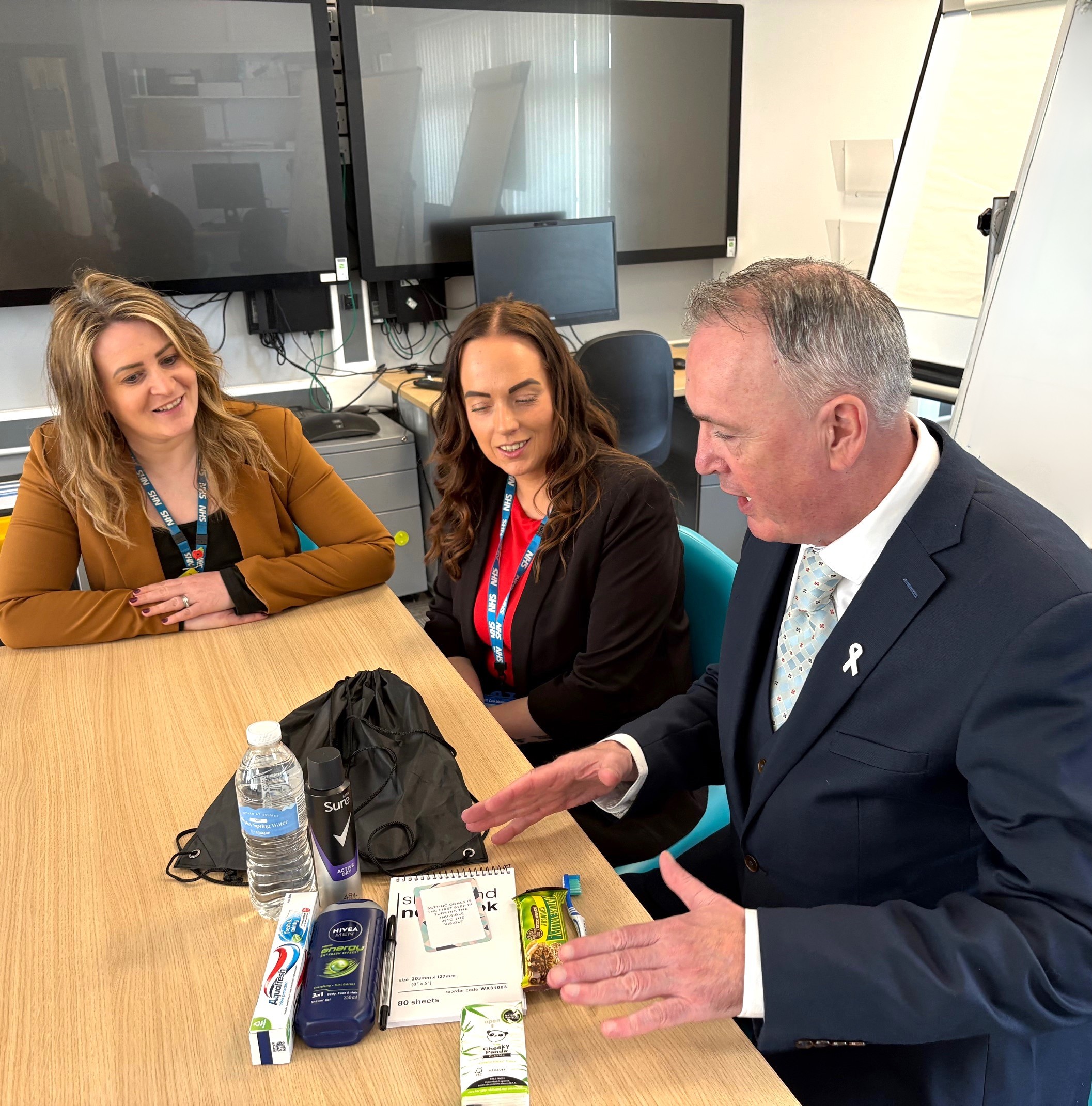 Clive Grunshaw, the Lancashire Police and Crime Commissioner, decided to fund the Grab Bags as part of his commitment to preventing violence against women and girls. Mr Grunshaw’s Police and Crime Plan for 2024 to 2029 adopts a zero-tolerance approach, focusing on partnership working, prevention and strengthening victim support to ensure women and girls in the Lancashire are safe and feel safe. More information is available on the PCC website.
Mr Grunshaw said: “Domestic abuse often happens behind closed doors, meaning it can go unreported and many victims suffer in silence. I’m proud to support initiatives that provide practical help for victims.
“We must ensure that when victims do come forward, particularly in trusted settings like hospitals, that they can access the support they need and deserve.”
Rebecca White, Emergency Department Navigator (EDN) at the RLI, said: “When people come to the hospital because they’ve been harmed and are in fear, they often arrive with nothing.
“They may have fled very suddenly, leaving all their belongings behind, or they might not even have access to a mobile phone due to coercive control, damage during an assault or the risk of being tracked. These very basic barriers can be what stops someone from leaving safely. Without essential items, some victims of violence feel they have no option but to return to unsafe situations.”
Rebecca works alongside Natalie Wright, Health Independent Domestic Violence Advisor (IDVA) and Chloe Haughton, Health Independent Sexual Violence Advisor (ISVA) at the RLI, whose roles are also funded by the Office of the PCCL.
 Each Grab Bag contains carefully chosen items to support people during onward travel, while accessing emergency accommodation or when accessing refuge services. The bags include essential toiletries such as a toothbrush, toothpaste, deodorant, body wash, sanitary products, bottled water and snacks.
There is also a notebook and pen to help people record appointments, contact details or safety plans, along with a small affirmation card offering words of encouragement and reassurance at a moment when many people feel frightened, powerless or alone. Depending on individual circumstances and assessed risk, patients may also be provided with a personal safety alarm and/or a basic mobile phone with a SIM card, enabling them to contact emergency services and support agencies safely.
The Grab Bags are kept in the ED itself and can be made available at any time, including out-of-hours, meaning patients can be supported at any time of day or night. This also supports safer discharge from hospital, empowering staff to put more robust safety plans in place rather than discharging people without the tools they need to stay safe.
While the majority of those supported are expected to be women fleeing domestic abuse, the bags are available to anyone fleeing violence, including men and young people, ensuring an inclusive response based on need rather than labels.

Natalie said: “I have already distributed two bags to patients who have fled high risk domestic abuse. I supported both patients to safe accommodation and provided them each with a bag to help them settle into their accommodation in those first couple of days which are often the hardest.
“This is a small investment that can have a lasting impact. If someone feels seen, supported and safer at this crucial moment, they are more likely to engage with help and make changes that protect them and their families in the long term.”
Patients in the ED at the RLI who would like any advice or support can speak directly to the clinician caring for them who can then put them in touch with Natalie, Rebecca and the Safeguarding team at UHMBT.
People fleeing violence in Lancashire can also contact SafeNet or call: 0300 3033 581.